


 Log in to your portal
From construction sites and factories to warehousing and mining operations, helmets play a critical role in preventing serious head injuries and saving lives. This post explores what safety helmets are, why they are essential, how they work, and how to choose and use them correctly.
Why Safety Helmets Matter
The human head is extremely vulnerable. Even a minor impact can result in concussions, skull fractures, or traumatic brain injuries. In high‑risk environments, falling objects, slips, collisions, or electrical hazards are common causes of head injuries. Safety helmets are designed to:
- Absorb, deflect or reduce the force of impact
- Protect the skull and brain from direct blows
- Shield the head from electrical, thermal, or chemical hazards
(depending on helmet type)
Occupational safety studies, including research from the UK Health and Safety Executive (HSE) and various meta-analyses, confirm that proper helmet use reduces serious head injury risks by 60%–88%.
Core Components
- Shell:
The hard outer layer of the helmet, usually made from high-density polyethylene (HDPE) or polycarbonate. Its purpose is to protect the head by resisting penetration and spreading the force of an impact over a larger area. - Harness:
The internal strap system that sits between the shell and the wearer’s head. It maintains a clearance of around 30 mm, helping to absorb impact energy and reduce the force transferred to the skull. - Headband:
An adjustable part of the harness that fits around the head. Adjustment systems such as ratchet or pin-lock mechanisms allow the helmet to be fitted securely and comfortably. - Cradle:
The upper straps of the harness that sit over the top of the head. These help with shock absorption and ensure the helmet sits correctly. - Sweatband:
A strip of absorbent material, typically cotton or a synthetic fabric, positioned at the front of the headband to absorb perspiration. - Chin Strap:
A strap worn under the chin to help keep the helmet in place, particularly during work at height or in windy conditions. Different standards specify different release or retention strengths depending on the intended use. - Peak/Brim:
A projection at the front of the helmet, or a full brim around the edge, designed to provide protection from the sun and rain, as well as falling objects.
Common Accessories
Safety helmets are often compatible with various manufacturer-approved accessories that fit into universal attachment slots:
- Visors/Face Shields: Clear or tinted shields made of polycarbonate that protect the eyes and face from high-speed particles, liquid droplets, or molten metal.
- Earmuffs/Ear Defenders: Integrated hearing protection that can be mounted directly onto the helmet.
- Ventilation Holes: Small holes in the shell designed to allow airflow and keep the wearer cool, though these are typically absent in helmets designed for electrical insulation.
- Winter Liners: Thermal liners for use in cold conditions.
- Reflective Stickers: Placed on the shell to enhance the visibility of the worker.
Types of Safety Helmets (UK)
The helmet types described below are not unique to the UK. They are based on European (EN) safety standards, which are widely recognised and used internationally. However, these standards are fully accepted and enforced in the UK under UK health and safety legislation.
It is important to understand that employers must ensure safety helmets meet the relevant EN standards, which are referenced by UK regulations and guidance from the Health and Safety Executive (HSE). While similar helmets may be used in other countries, the classifications and purposes outlined here reflect what is expected and commonly required in UK workplaces.
Focusing on helmet purpose rather than brand or appearance helps ensure the correct level of protection is provided for each working environment.
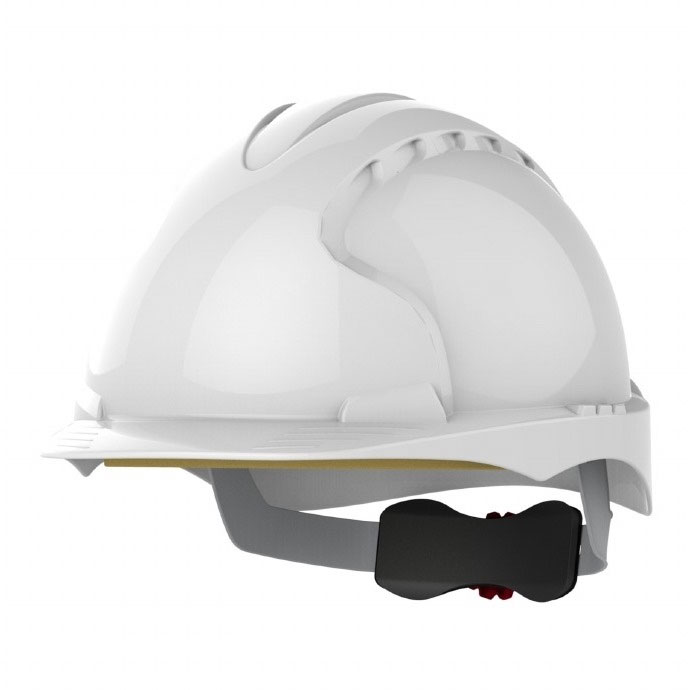
1. Industrial Safety Helmets (EN 397)
Purpose: Protection against falling objects and vertical impact.
These are the standard hard hats used across many UK industries. They are designed to absorb impact from objects falling from above and to resist penetration.
Typical hazards protected against:
- Falling tools or materials
- Head strikes against fixed objects
- Limited exposure to electrical hazards (if marked)
This helmet type is suitable where the primary risk is overhead impact.
 2. High-Performance Industrial Helmets (EN 14052)
Purpose: Enhanced protection against impacts from multiple directions.
These helmets provide higher performance than EN 397 helmets, including improved side, front, and rear impact protection.
Typical hazards protected against:
- Heavy or high-energy impacts
- Side and rear head strikes
- More severe industrial risks
They are used in environments where impact risks are higher or less predictable.
 3. Electrical Insulating Helmets (EN 50365)
Purpose: Protection against electrical shock when working near live systems.
These helmets are made from non-conductive materials and are designed specifically for electrical environments.
Typical hazards protected against:
- Contact with live electrical components
- Arc-related electrical risks (when used with other PPE)
They should only be used where electrical insulation is required and must be kept free from damage or contamination.
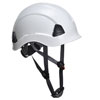 4. Work-at-Height and Climbing Helmets (EN 12492)
Purpose: Head protection where there is a risk of falls or multiple-direction impacts.
These helmets are designed to remain securely fastened during a fall and to protect the head from impacts from any direction.
Typical hazards protected against:
- Falls from height
- Swing or pendulum impacts
- Falling objects while suspended
A strong chin strap is a key feature to prevent helmet loss.
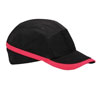 5. Bump Caps (EN 812)
Purpose: Protection against minor head bumps in low-risk environments.
Bump caps are lightweight and provide limited protection. They are not designed to protect against falling objects.
Typical hazards protected against:
- Accidental contact with fixed structures
- Low-level knocks and scrapes
They should only be used where there is no risk of falling objects.
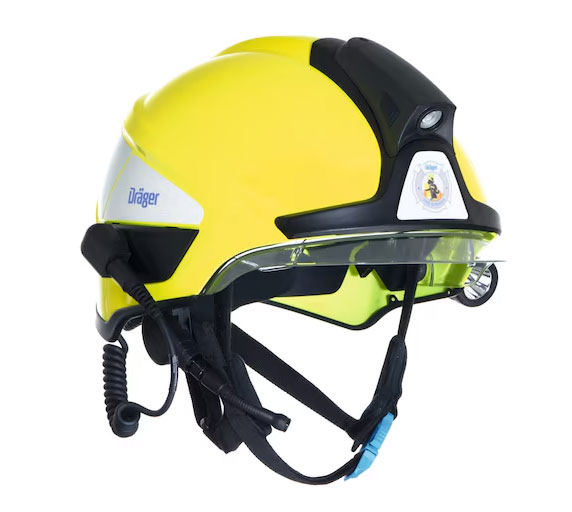 6. Firefighting Helmets (EN 443)
Purpose: Protection against heat, flames, and impact during emergency response.
These helmets are purpose-built for fire and rescue operations and provide combined protection against multiple hazards.
Typical hazards protected against:
- Radiant Heat
- Direct Flame
- Hot Solids/Molten Metals
- Thermal Insulation
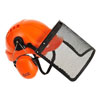 7. Forestry and Chainsaw Helmet Systems
Purpose: Combined head, face, and hearing protection in outdoor cutting environments.
These helmet systems integrate multiple forms of PPE into one unit.
Typical hazards protected against:
- Falling branches
- Flying debris
- Chainsaw kickback debris
- Prolonged noise exposure
Specific standards:
- Head Protection (Ground):
BS EN 397 or BS EN 14052 (higher impact protection). - Head Protection (Aerial):
BS EN 12492 is recommended by AFAG for climbing. - Eye/Face Protection:
Mesh visors must comply with BS EN 1731. - Hearing Protection:
Must comply with BS EN 352-1 (earmuffs), BS EN 352-2 (earplugs), or BS EN 352-3 (helmet-mounted). - Chin Straps:
Mandatory for aerial work to prevent the helmet from falling off, often requiring a 4-point harness.
Proper Helmet Fit and Usage
Even the best helmet cannot protect effectively if worn incorrectly. Key guidelines include:
- Choose the correct size for a snug but comfortable fit
- Adjust the suspension system so the helmet sits level on the head
- Do not wear helmets tilted too far back or forward
- Replace helmets after a major impact, even if no damage is visible
- Avoid drilling holes, painting, or modifying helmets, as this weakens the structure
Maintenance and Replacement
Safety helmets have a limited lifespan. Exposure to sunlight, heat, chemicals, and regular wear can degrade materials over time.
- Inspect helmets regularly for cracks, dents, or weakened straps
- Clean using mild soap and water (avoid harsh chemicals)
- Follow manufacturer recommendations for replacement, typically every 3–5 years
Promoting Helmet Safety Awareness
Education and enforcement are essential for helmet safety. Employers, schools, and communities should:
- Provide proper training on helmet use
- Encourage a safety‑first culture
- Enforce helmet policies consistently
- Lead by example through visible helmet use
Conclusion
Safety helmets are more than just “protective gear”, they are life savers.
Whether on a construction site, a road, or a sports field, wearing the right helmet correctly can mean the difference between a minor incident and a life‑altering injury.
Don’t leave it to chance, ensure that you regularly test your equipment.
