


 Log in to your portal
Almost everyone knows that PPE is often the last line of defence. But what if that “protection” isn’t protecting anyone? Is there a chance that someone has managed to pull the wool over your eyes?
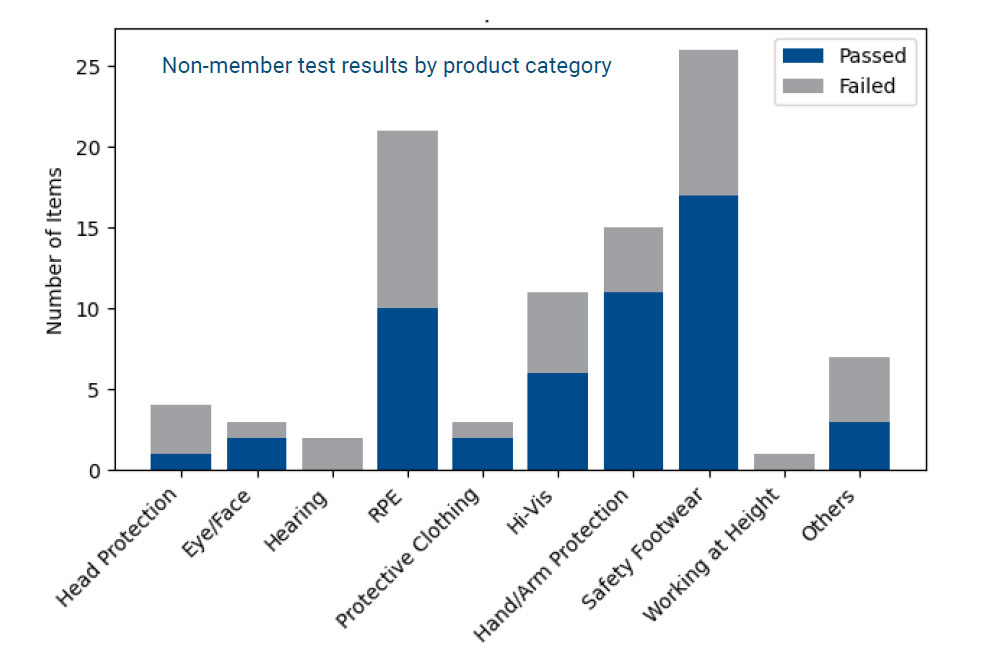
Recent findings from the British Safety Industry Federation (BSIF) have shown that 82% sourced from non-registered suppliers failed to meet required safety standards.
This isn’t just a compliance issue; it’s a serious and immediate risk to worker safety.
How exactly is PPE Is Failing?
BSIF’s latest testing uncovered widespread failures across multiple categories:
- Respiratory Protection
Equipment frequently failed filtration tests, with some products allowing dangerously high levels of particle penetration. - Head Protection
Safety helmets showed critical weaknesses, including poor impact resistance and failing chin strap anchorage. - Hearing Protection
Some products cracked under drop testing, rendering them ineffective when needed most. - Hand & Arm Protection
Gloves often failed abrasion and cut resistance tests-sometimes performing below their stated ratings. - Safety Footwear
Failures included inadequate toecap protection, poor impact resistance, and insufficient midsole penetration protection. - Eye Protection
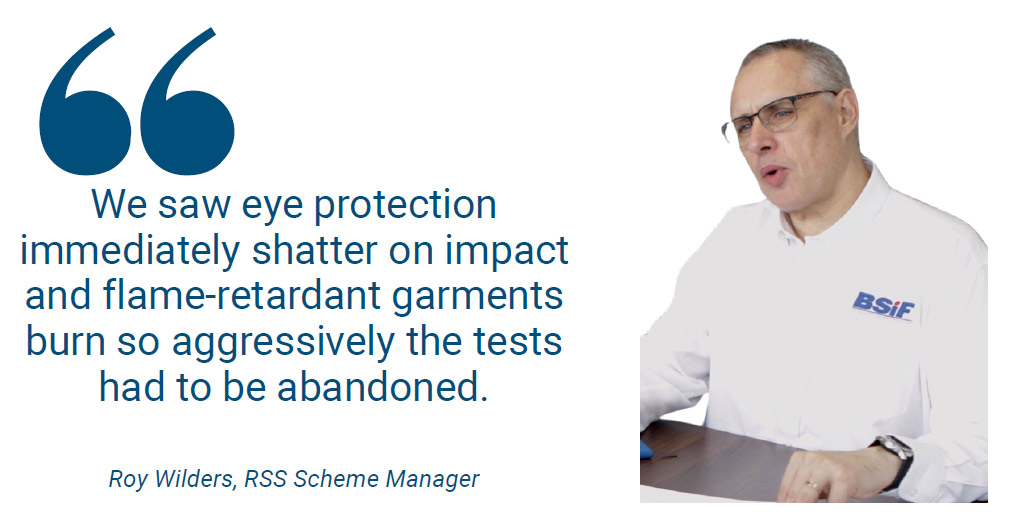
Instead of resisting impact, some lenses shattered-creating additional hazards. - Protective Clothing
Particularly alarming were flame-retardant garments that burned aggressively and chemical suits sold without verified resistance data.
These are not minor defects. They represent real-world safety failures that could result in serious injury or worse.
More Than Just Product Failures
The issues identified weren’t limited to physical performance. Many products also failed in critical compliance areas:
Certification & Documentation Failures
- Missing or incomplete Declarations of Conformity
- No verifiable evidence of testing or regulatory assessment
- Entire product categories lacking required documentation
Without proper certification, there is no reliable proof that it is fit for purpose.
Marking & Labelling Issues
- Missing or incorrect CE/UKCA markings
- Use of removable stickers instead of permanent labels
- Lack of traceability information
- References to outdated standards
These issues make it nearly impossible to verify compliance and can mislead users about the level of protection provided.
Inadequate User Instructions
Many products were supplied with:
- Missing or incomplete instructions
- No guidance on correct fitting or usage
- Lack of maintenance or limitation details
Even compliant equipment can fail if used incorrectly making poor instructions a direct safety risk.
The Safer Alternative: BSIF Registered Suppliers
In stark contrast, PPE sourced through BSIF Registered Suppliers showed a 96% compliance rate with all relevant regulations.
This clearly demonstrates that Choosing a trusted, registered supplier significantly reduces the risk of:
- Substandard products
- Compliance failures
- Unsafe working conditions
Strengthen Your Procurement Process
With so much at stake, organisations must take a more rigorous approach to sourcing. That means prioritising suppliers who can demonstrate:
- Verified compliance
- Transparent documentation
- Proven product performance
Choose Confidence. Choose Compliance.
At PK Safety, we are proud to be a BSIF Registered Supplier, committed to providing PPE that meets the highest standards of safety, compliance, and reliability.
Don’t take risks with your workforce’s safety. Partner with us to ensure your equipment is fit for purpose, fully compliant, and ready to protect when it matters most.
