


 Log in to your portal
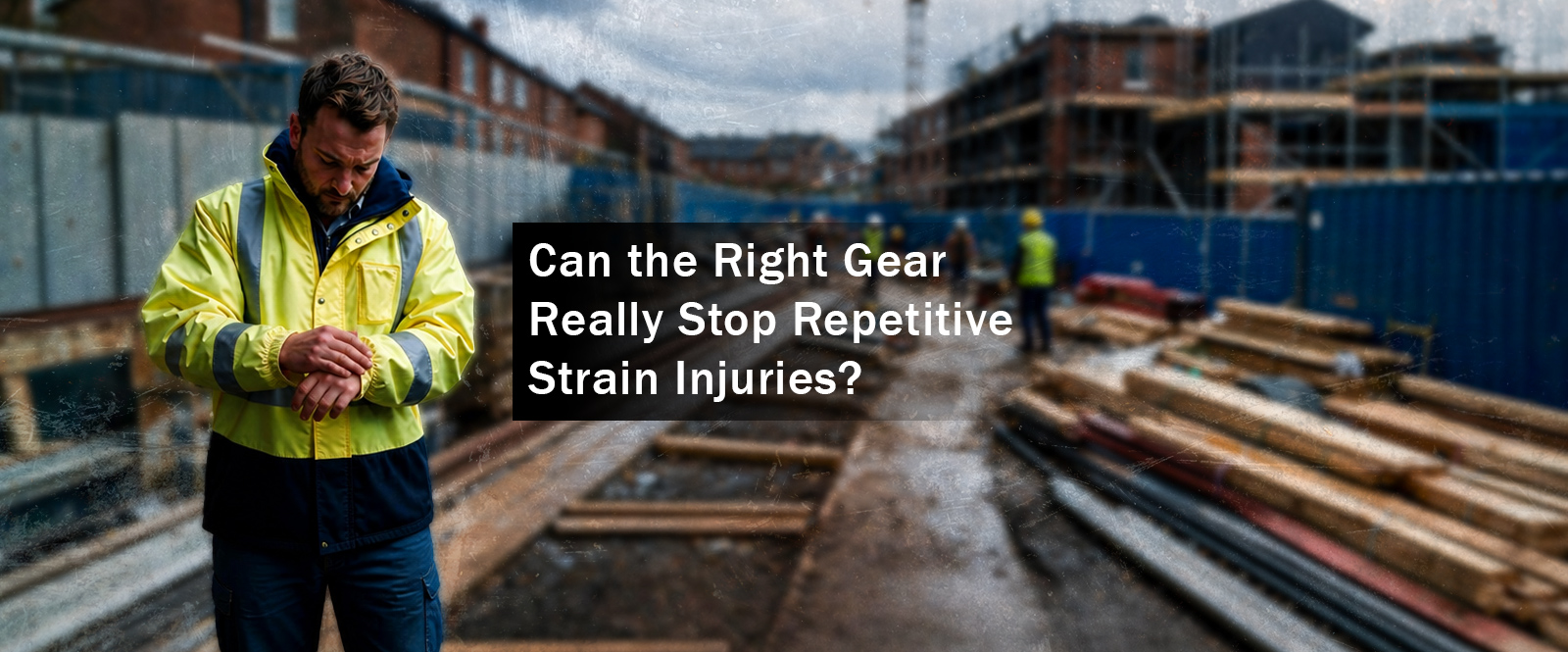
Bad posture, forceful gripping, and doing the same motion over and over are the real culprits behind repetitive strain injuries. But it turns out the gloves, boots, and glasses you wear every day quietly play a bigger role than most people realise.
Most people know that PPE is the last line of defence against burns, falling objects, bruising etc, and they're not wrong. But there's a quieter benefit that PPE can bring that doesn't get talked about nearly as much as it should. And that is the right gear, worn correctly can help reduce the risk of RSI becoming a serious problem.
PPE won't fix a bad workstation or make a repetitive task any less repetitive. What it can do is make the difference between finishing a shift tired and finishing it in real discomfort and pain.
To be clear, no glove or boot is a cure-all, they are just one piece of a much bigger picture. But because they are often the cheapest and easiest things to get right, it's worth understanding what role they can play.
So what exactly is a repetitive strain injury?
A repetitive strain injury (RSI) is damage to muscles, tendons, or nerves caused by doing the same movement over and over, often combined with awkward posture, sustained force, or too little recovery time between repetitions.
It's not one specific injury but an umbrella term covering several related conditions, including:
- Tendinitis: Inflammation of a tendon from overuse
- Carpal tunnel syndrome: Compression of the median nerve in the wrist, common with repetitive hand/wrist motion
- Tennis elbow (lateral epicondylitis): Irritation of the tendons around the elbow
- Trigger finger: A tendon in the finger gets irritated and catches or locks
- Bursitis: Inflammation of the fluid-filled sacs that cushion joints
The warning signs are usually easy to brush off at first:
- An ache that won't quite go away
- Tingling or numbness, especially in the hands
- A grip that feels weaker than it used to
- Swelling or stiffness
- Everyday tasks starting to feel harder than they used to
Ignore those signals long enough and they can turn into something with a proper medical name: Tendonitis, carpal tunnel syndrome, tennis elbow - all fairly common, and far easier to prevent than to undo.
Where the right gear actually makes a difference
When PPE equipment fits badly or performs poorly, your body compensates. You grip harder, twist further, squint more, shift your weight awkwardly. Do that enough times a day and it adds up fast. Good gear simply removes the need to compensate.
Gloves
A glove that doesn't fit right is one of the sneakiest causes of hand and forearm strain. If it's too loose, too restrictive, or lacks the proper grip then using tools will be so much harder than it should be. A well-made, properly fitted glove does the opposite:
- Keeps your grip secure even when things get wet or oily
- Means you don't have to clamp down as hard on tools
- Lets your fingers move the way they naturally would
- Helps stave off that "claw hand" feeling by the end of a long shift
Anti-vibration gloves
If your job involves using a lot of power tools, your hands are absorbing a lot of vibration whether you notice it or not. Anti-vibration gloves won't cancel that out entirely, nothing really does, but they can take the edge off, especially when the tools themselves are well maintained and breaks are built into the day. Think of them as one layer of protection, not the whole solution.
Knee pads
Decent knee pads spread out pressure out instead of letting it concentrate on one small area, which makes kneeling more bearable and, just as importantly, makes it easier to hold a proper working position instead of twisting yourself into something less safe.
Footwear
Hours on a hard floor doesn't just tire out your feet, it works its way up through your knees, hips, and lower back too. Supportive, properly fitted footwear helps by:
- Giving you steadier footing
- Cutting down on foot fatigue
- Softening the impact of every step
- Making it easier to stand and walk with good posture
Fit matters here as much as quality does because boots that are too tight or too loose can create problems of their own.
Eye and face protection
This one surprises people. Safety glasses that keep sliding down your nose or fogging up arn't just annoying, they get you tilting your head, squinting, or constantly pushing them back into place. Do that for eight hours and your neck and shoulders feel it. Glasses that actually fit and resist fogging let you keep your head in a natural position without thinking about it.
Worth remembering: gear is a support, not a fix. If the underlying task is the problem, better PPE alone won't solve it, you have to look at the task itself.
PPE is one piece of a bigger puzzle
It's tempting to treat protective equipment as the fix, but that's putting the cart before the horse. The real starting point is figuring out what's causing the strain in the first place, and that usually points back to how a task or workstation is set up, not what's in the equipment cupboard.
A genuinely effective approach usually includes:
- Setting up workstations so people aren't reaching, twisting, or hunching unnecessarily
- Rotating people through different tasks so no one muscle group takes all the load
- Bringing in mechanical aids for lifting or handling wherever possible
- Choosing tools that are actually designed with the human body in mind
- Giving people real breaks, not just a nod to them
- Training workers on techniques that don't quietly wear them down
- And yes, making sure the PPE people are given actually fits and suits the job
Put those together and the payoff is real: less fatigue, more comfort, and a workforce a lot less likely to be dealing with a long-term injury down the line.
How to actually pick the right gear
Here's an uncomfortable truth: the best PPE in the world does nothing if people take it off after twenty minutes. So the real test isn't "is this the highest-spec option available", it's "will people actually keep this on all day."
A few things worth checking before you buy:
- Does it fit properly, not roughly, but properly?
- Is it light and flexible enough not to get in the way?
- Does it allow the grip and dexterity the job actually needs?
- Is it breathable and comfortable enough to forget you're wearing it?
- Does it work alongside whatever other gear people already wear?
- Is it actually matched to the hazards and tasks involved, rather than a generic pick?
Comfort isn't a nice-to-have here, it's the whole point. Gear that feels good gets worn consistently, and gear that's worn consistently is the only gear that actually does its job.
The bottom line
Repetitive strain injuries almost never show up overnight. They build slowly, one small movement at a time, until one day the pain is impossible to ignore. That slow build is actually good news, because it means there's plenty of opportunity to head it off.
Well-fitted, well-chosen protective gear won't prevent RSIs, but paired with smart task design, proper training, and genuinely sensible work practices, it plays a real part in keeping people comfortable, capable, and injury-free for the long run.
