


 Log in to your portal
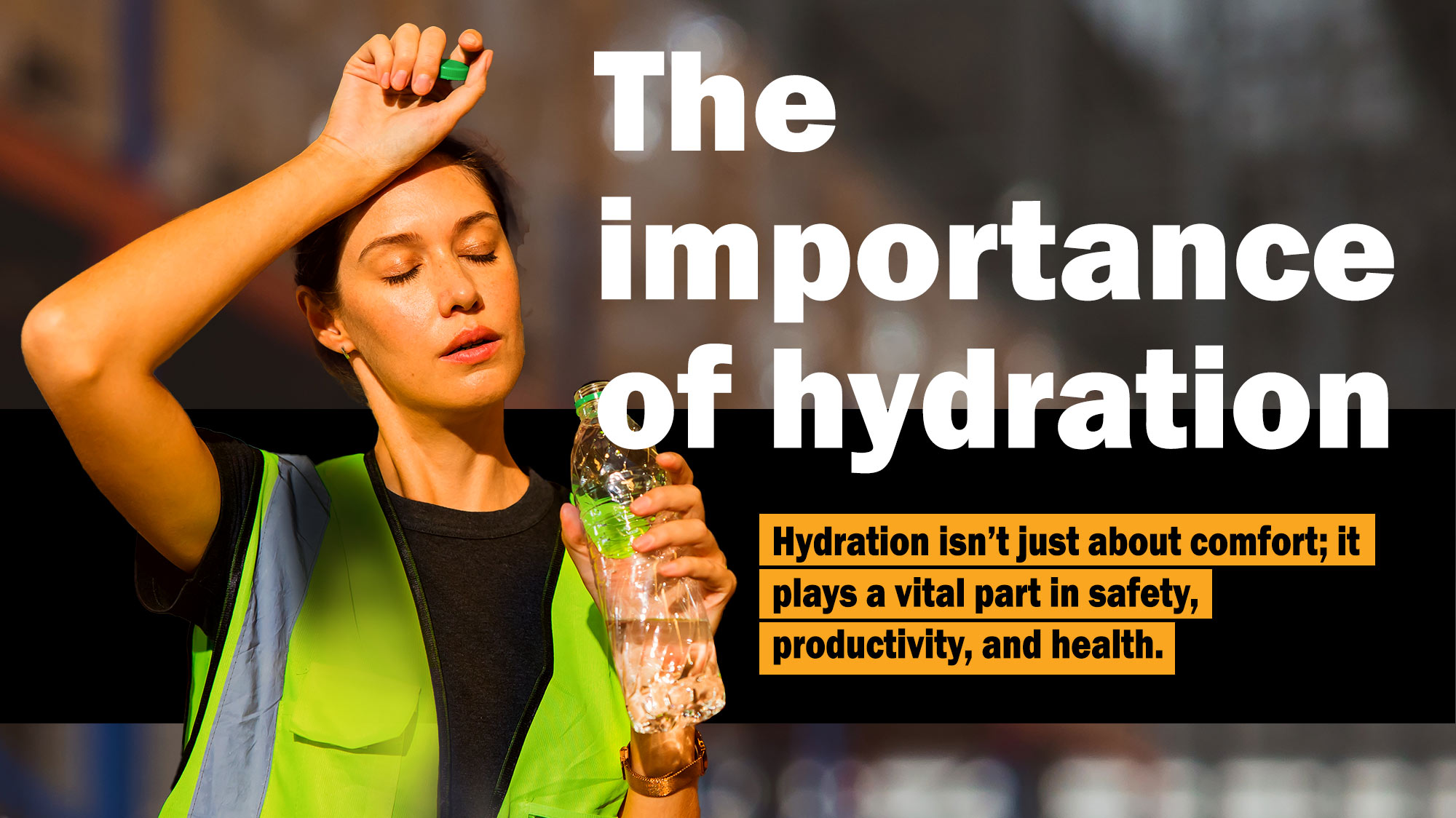
It’s a given that outdoor workers are exposed to the best, and the worst the British weather has to offer. It’s no wonder then that we in the UK tend to focus our efforts on keeping dry and warm – as temperatures rise and our summers become warmer access to water becomes even more critical. Hydration isn’t just about comfort; it plays a vital part in safety, productivity, and health.
The Physical Demands of Outdoor Work
Outdoor workers often face long hours of manual labour in direct sunlight or hot, humid conditions. These conditions obviously lead to increased sweating, which is the body’s natural cooling mechanism.
While sweating helps maintain a safe body temperature, it also results in the loss of vital fluids and electrolytes. If these losses aren’t replaced regularly, dehydration can set in quickly — sometimes within just a few hours.
Even mild dehydration (1-2% loss of body weight from fluid) can significantly impair physical and cognitive performance. This means slower reaction times, reduced strength, poor concentration, and a higher risk of mistakes and injuries.
Common symptoms of dehydration
- Dry mouth and throat
- Thirst (note: thirst may not appear until dehydration is already underway
- Dark yellow urine or infrequent urination
- Fatigue or weakness
- Dizziness or light-headedness
- Headache
- Confusion or difficulty concentrating
- Muscle cramps
- Rapid heartbeat or breathing
- Cool, clammy skin (in early stages) or hot, dry skin (in later stages like heat stroke
If symptoms worsen — particularly confusion, fainting, or cessation of sweating — seek medical attention immediately, as these may signal heat stroke, a life-threatening emergency. Chronic dehydration carries long-term risks. Repeated cycles of dehydration and rehydration can strain the kidneys and cardiovascular system over time, potentially leading to more serious health problems.
Preventive Hydration Strategies
- Drink water frequently: Don’t wait until you feel thirsty. By the time thirst hits, dehydration has already begun. A good rule of thumb is to drink 1 cup (about 200 ml.) of water every 15–20 minutes when working in the heat.
- Start the day hydrated: Begin the workday with a glass or two of water to help offset early losses.
- Avoid sugary drinks: These can worsen dehydration. Water, electrolyte-replenishing drinks, or diluted sports drinks are better options.
- Urine colour: Pale yellow indicates good hydration; darker colours suggest the need to drink more fluids.
Building a Culture of Hydration
Employers can play a vital role in promoting hydration. Providing easy access to cool water, scheduled hydration breaks, shaded rest areas, and hydration education can all help protect workers and boost performance. When workers stay hydrated, they not only feel better but are also safer and more effective on the job. In conclusion, hydration should not be a minor detail — it’s a foundational aspect of outdoor workplace safety and efficiency.
Making hydration a priority can mean the difference between a productive day and a potentially dangerous situation.
Author: Len Bridgeman
Sources:
Temperature in the workplace: Dehydration
https://www.hse.gov.uk/temperature/employer/dehydration.htm
Keeping Workers Well-Hydrated
https://www.osha.gov/sites/default/files/publications/OSHA4372.pdf
