


 Log in to your portal
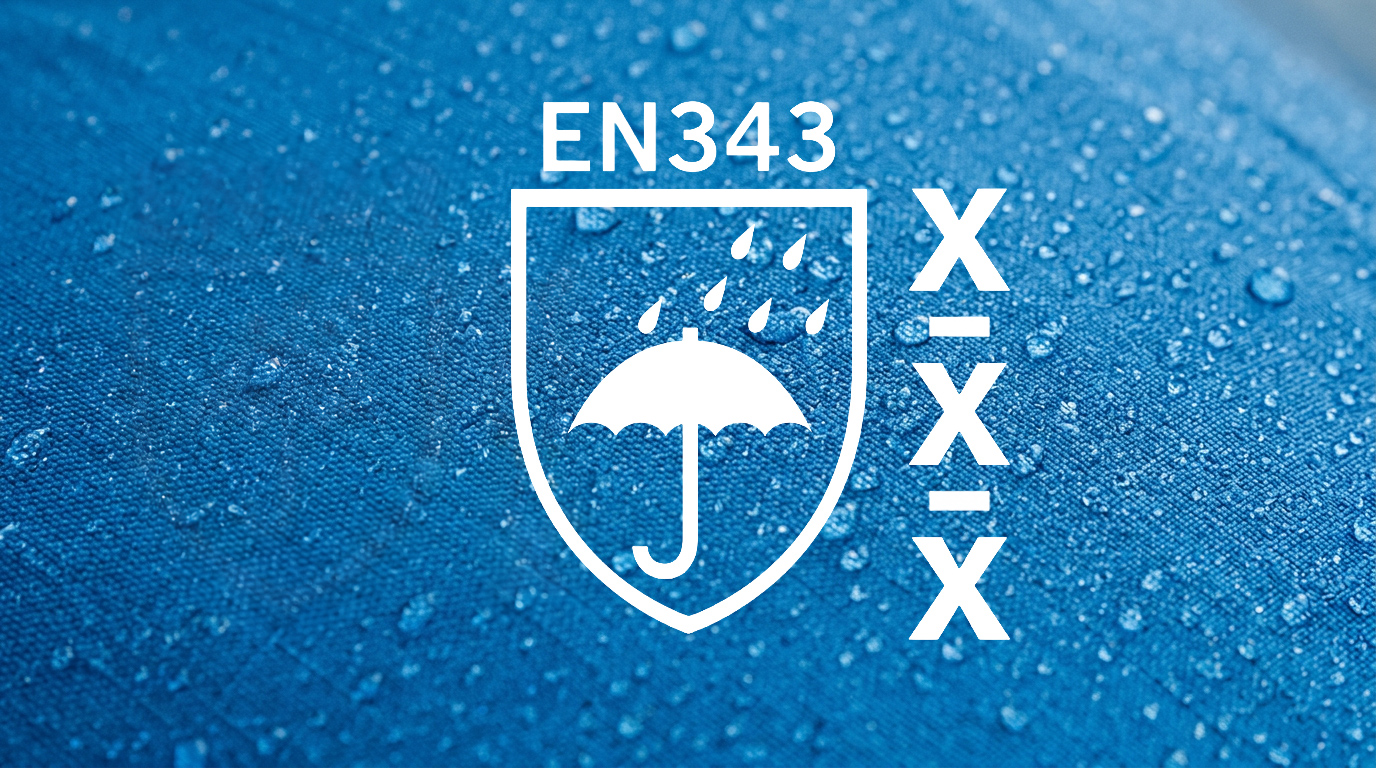
EN 343 Explained: Understanding Waterproof Workwear Standards
Keeping outdoor workers dry and comfortable throughout the working day can be a difficult task, particularly during the British winter. Choosing the right waterproof workwear is therefore about more than simply finding a jacket that keeps the rain out.
We work with organisations whose employees operate outdoors in all kinds of weather. One of the questions we regularly discuss with customers is how to compare waterproof garments and understand the protection they offer.
A useful starting point is the European standard for protective clothing against rain, formerly EN 343:2019 and now superseded by EN ISO 24232:2025.
In this guide, we’ll explain what the standard covers, what the performance ratings mean, how to interpret older EN 343 labels and what buyers should look for when choosing waterproof workwear.
What is EN 343?
EN 343 is a European standard that specifies requirements and test methods for protective clothing designed to protect the wearer against wet weather.
This includes exposure to:
- Rain and other precipitation
- Snow
- Fog
- Ground moisture and humidity
The standard helps manufacturers demonstrate how their garments perform against water penetration and how effectively moisture vapour can escape from the clothing.
It is particularly relevant to people working outdoors in industries such as construction, utilities, highways maintenance, rail, local authorities, landscaping and facilities management.
Important update: EN 343:2019 has been replaced
If you have previously purchased waterproof workwear, you may be familiar with the marking EN 343:2019.
However, there has been an important standards update.
BS EN 343:2019 was withdrawn on 27 October 2025 and superseded by BS EN ISO 24232:2025.
The new standard is titled:
BS EN ISO 24232:2025 – Protective clothing – Protection against rain.
It is the current British Standard reference for rain-protective clothing.
There is also an important UK regulatory update. On 15 October 2026, the UK Government included EN ISO 24232:2025 in its designated standards list for PPE under Regulation (EU) 2016/425 as it applies in domestic UK law.
This means manufacturers and buyers should now use the new standard when considering conformity and specifying new rain-protective PPE.
This change does not mean that every garment previously certified to EN 343:2019 must automatically be discarded. Existing garments should be assessed against their original conformity documentation, condition, and suitability for the intended use.
What does the waterproof clothing rating measure?
The EN 343 approach assesses two important material performance characteristics:
1. Resistance to water penetration
This measures how effectively the garment material prevents water from passing through it. The test uses hydrostatic pressure to assess how much water pressure the material can withstand before water can penetrate.
The performance of the fabric and seams is important, because a waterproof fabric is of limited benefit if water can enter through poorly manufactured seams.
For garments carrying the older EN 343:2019 marking, water penetration resistance was classified from Class 1 to Class 4:
- Class 1: Lowest level of performance.
- Class 2: Intermediate level of performance.
- Class 3: Higher level of performance.
- Class 4: Highest level of performance.
Higher classes indicate greater resistance to water penetration under the specified laboratory test conditions.
2. Water vapour resistance (breathability)
Keeping rain out is only part of the challenge.
When someone is physically active, their body produces heat and perspiration. If moisture cannot escape from inside their clothing, it can build up and leave the wearer feeling damp and uncomfortable.
Water vapour resistance measures how difficult it is for moisture vapour to pass through the garment material.
For EN 343:2019, this was also classified from Class 1 to Class 4.
In this case, the relationship is reversed:
- A lower water vapour resistance value indicates better breathability.
This is an important distinction when comparing waterproof garments. A garment with excellent waterproof performance may not necessarily be the most comfortable choice for someone undertaking physically demanding work.
What is the rain tower test?
The older EN 343:2019 standard also included an optional test for the waterproof performance of a complete, ready-made garment.
This is commonly referred to as the rain tower test.
Rather than testing just a piece of material, the test exposes a complete garment to simulated rainfall under controlled conditions.
It assesses whether water penetrates the garment and reaches the wearer during the test.
The result is represented by an additional marking:
- R – the garment has passed the optional rain tower test.
- X – the test was not carried out, or the garment did not achieve a pass.
The rain tower result provides additional information about the performance of the finished garment, rather than just its component materials.
When looking at older EN 343:2019 labels, this is useful information to consider alongside the two main performance classes.
For garments certified to the replacement EN ISO 24232:2025 standard, always refer to the manufacturer’s technical documentation for the applicable test results and marking requirements. Do not assume that every marking or classification from the previous edition can be transferred directly without checking.
How do you choose the right waterproof workwear?
The highest performance rating is not automatically the best choice for every worker.
The right garment depends on the conditions in which it will be worn and the type of work being undertaken.
When choosing waterproof clothing, consider the following:
Weather conditions
Someone working outside throughout the day in persistent heavy rain will have different requirements from someone who only occasionally works outdoors in showers.
Physical activity
A worker undertaking strenuous physical activity may benefit from a more breathable garment to help manage heat and perspiration.
Duration of exposure
Consider how long employees will be exposed to wet weather. Extended exposure places different demands on waterproof clothing compared with short periods outdoors.
Comfort and fit
Garments should allow sufficient freedom of movement and accommodate any additional layers or PPE that need to be worn underneath.
Other protective requirements
Waterproof clothing may also need to provide additional protection, such as high visibility, flame resistance or protection against other workplace hazards. Where multiple hazards are present, make sure the selected garment has the appropriate certification for each relevant protective requirement.
What should employers look for when purchasing waterproof PPE?
When buying waterproof workwear for employees, it is worth looking beyond the description ‘waterproof’ or ‘showerproof’.
Check the following:
- The applicable product standard and certification.
- Water penetration performance.
- Water vapour resistance and breathability.
- Whether complete-garment rain testing has been carried out, where relevant.
- Seam construction and overall garment design.
- Suitability for the working environment and expected exposure.
- Compatibility with other PPE and workwear.
- Manufacturer instructions for washing, maintenance and care.
It is also important to remember that laboratory performance does not guarantee that a garment will remain waterproof indefinitely. Wear, damage, poor maintenance and incorrect washing can all affect performance.
Employers should regularly inspect workwear and replace garments when they are no longer suitable for their intended purpose.
Is EN 343:2019 still relevant?
Yes. EN 343:2019 remains relevant when identifying and understanding existing waterproof workwear, particularly garments already in service.
However, it has been withdrawn as a British Standard and replaced by BS EN ISO 24232:2025.
For new purchases and specifications, we recommend referring to the replacement standard and checking the applicable UK PPE conformity requirements.
For existing garments, do not assume that withdrawal of the standard automatically makes the clothing unsafe or unusable. Check the manufacturer’s documentation, product condition and suitability for the task.
Final thoughts
Choosing waterproof workwear is about finding the right balance between protection, comfort and practicality.
Understanding the performance ratings helps employers make more informed decisions and select clothing that is appropriate for the conditions their employees face.
Although EN 343 has been the familiar reference for many years, the introduction of EN ISO 24232:2025 is an important update for anyone specifying or purchasing rain-protective clothing.
Frequently asked questions
What is EN 343?
EN 343 is a European standard that specifies requirements and test methods for protective clothing designed to protect the wearer against wet weather, including rain, snow, fog, ground moisture and humidity.
Has EN 343:2019 been replaced?
Yes. BS EN 343:2019 was withdrawn on 27 October 2025 and superseded by BS EN ISO 24232:2025 – Protective clothing – Protection against rain.
What does the waterproof clothing rating measure?
Under EN 343:2019, garments were assessed for resistance to water penetration and water vapour resistance. Higher water penetration classes indicate better waterproof performance, while lower water vapour resistance indicates better breathability.
What is the rain tower test?
The rain tower test was an optional EN 343:2019 test for a complete, ready-made garment. It exposed the garment to simulated rainfall to assess whether water reached the wearer. A pass was marked R; X meant the test was not carried out or the garment did not pass.
Is EN 343:2019 still relevant?
EN 343:2019 remains relevant for understanding existing waterproof workwear, but it has been withdrawn as a British Standard and replaced by BS EN ISO 24232:2025. For new purchases and specifications, refer to the replacement standard and applicable UK PPE conformity requirements.
Need help choosing waterproof workwear?
If you need help understanding waterproof clothing ratings or choosing suitable workwear for your organisation, the team at PK Safety UK can help.
Call us on 01443 741999 or email sales@pksafetyuk.com to discuss your requirements.
